Fun Facts About MLK: 50+ Inspiring Facts About His Life
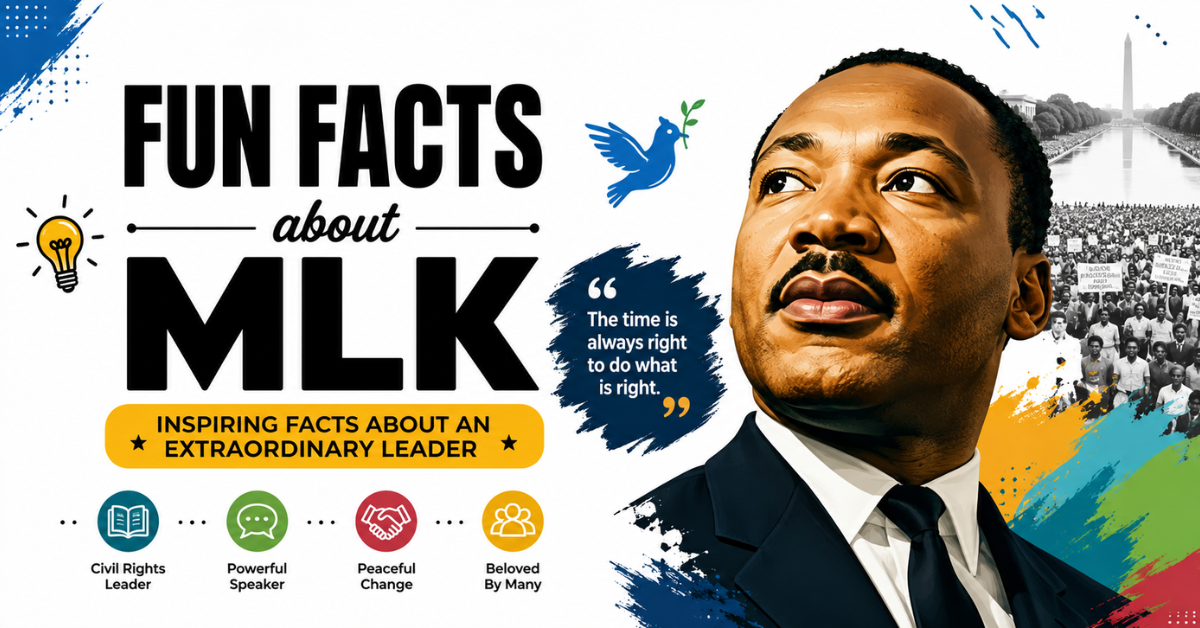
If you’re looking for fun facts about MLK, you’re about to discover fascinating details about Dr. Martin Luther King Jr. that go beyond the famous “I Have a Dream” speech. King was a powerful civil rights leader whose work helped shape American history and inspired people around the world.
Who Was Martin Luther King Jr.?
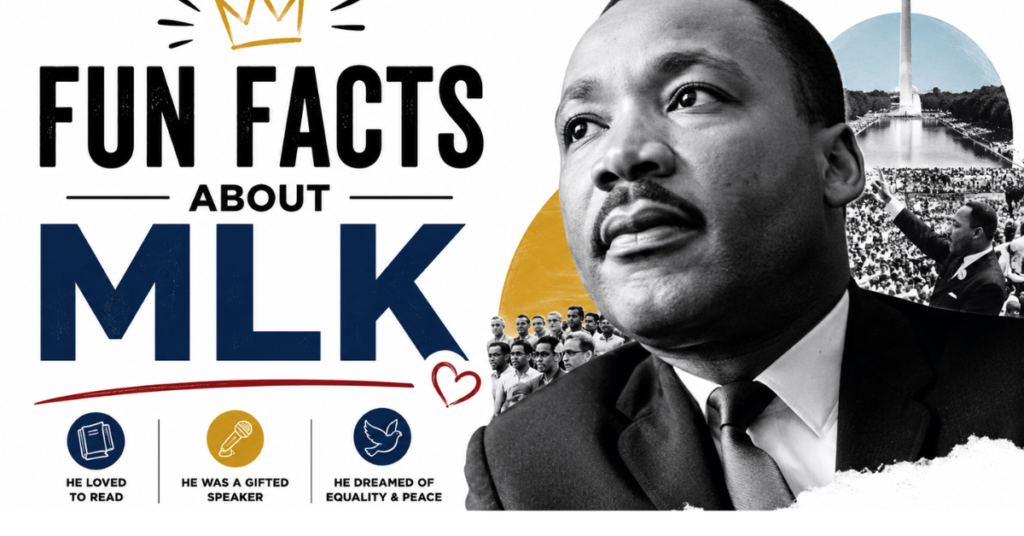
Martin Luther King Jr. was an American Baptist minister and civil rights leader who led the fight against racial segregation through nonviolent protest. He became the most visible face of the American civil rights movement between 1955 and 1968.
Why Was Martin Luther King Jr. Important?
King reshaped American law and public life. His organizing helped drive the passage of the Civil Rights Act of 1964 and the Voting Rights Act of 1965, and his philosophy of nonviolent resistance became a global model for social change movements.
When Was Martin Luther King Jr. Born?
He was born on January 15, 1929, in Atlanta, Georgia.
What Was Martin Luther King Jr.’s Real Name?
He was born Michael King Jr. His father, a pastor, later changed both their names to Martin Luther King in honor of the German Protestant reformer Martin Luther.
Martin Luther King Jr.’s Early Life
King grew up in a middle-class Black family during the era of legal segregation in the American South, an experience that shaped his lifelong commitment to justice.
Where Did Martin Luther King Jr. Grow Up?
He grew up on Auburn Avenue in Atlanta, in a neighborhood historically known as “Sweet Auburn,” one of the most prosperous Black communities in the country at the time.
Martin Luther King Jr.’s Family and Parents
His father, Martin Luther King Sr., was a Baptist pastor; his mother, Alberta Williams King, was a schoolteacher and church musician.
Martin Luther King Jr.’s Siblings
He had an older sister, Christine King Farris, and a younger brother, Alfred Daniel Williams King.
Martin Luther King Jr.’s Wife, Coretta Scott King
He married Coretta Scott King in 1953. She became a civil rights activist in her own right and carried on his work after his death.
Martin Luther King Jr.’s Children
The couple had four children: Yolanda, Martin III, Dexter, and Bernice King.
Martin Luther King Jr.’s Education
How Old Was Martin Luther King Jr. When He Entered College?
He entered Morehouse College at just 15 years old, later earning a divinity degree from Crozer Theological Seminary and a PhD in systematic theology from Boston University.
Martin Luther King Jr.’s Religious Background
Faith was central to King’s worldview and activism, rooted in Baptist theology and the Black church tradition.
Martin Luther King Jr. as a Baptist Minister
He was ordained a Baptist minister and served as pastor of Dexter Avenue Baptist Church in Montgomery, Alabama, before later co-pastoring Ebenezer Baptist Church in Atlanta with his father.
How Martin Luther King Jr. Became a Civil Rights Leader
King’s rise began almost by circumstance he was a young, relatively unknown pastor when a single act of protest thrust him into leadership.
Martin Luther King Jr. and the Montgomery Bus Boycott
After Rosa Parks refused to give up her bus seat in 1955, local organizers chose King to lead the Montgomery Bus Boycott, a 381-day protest that ended bus segregation in the city.
Martin Luther King Jr. and the Southern Christian Leadership Conference
In 1957, King co-founded the Southern Christian Leadership Conference (SCLC), which became the organizing engine behind many of his later campaigns.
Martin Luther King Jr.’s Role in the Civil Rights Movement
He served as the SCLC’s president and chief strategist, coordinating protests, boycotts, and marches across the American South throughout the 1950s and 1960s.
Martin Luther King Jr. and Nonviolent Protest
King’s approach to activism was deliberate, disciplined, and philosophically grounded.
Why Did Martin Luther King Jr. Believe in Nonviolence?
He drew on Christian teaching and Mahatma Gandhi’s philosophy of civil disobedience, believing nonviolent resistance could expose injustice without perpetuating hatred.
Martin Luther King Jr.’s Fight Against Racial Segregation
King targeted segregation directly through organized, high-visibility campaigns designed to force national attention onto local injustice.
Martin Luther King Jr. and the Birmingham Campaign
In 1963, King led demonstrations in Birmingham, Alabama, where police responded with fire hoses and attack dogs images that shocked the nation and built support for federal civil rights legislation.
What Was the Letter From Birmingham Jail?
Written in April 1963, the Letter from Birmingham Jail is King’s defense of nonviolent direct action, arguing that “injustice anywhere is a threat to justice everywhere.”
Why Was Martin Luther King Jr. Arrested?
He was arrested for acts of civil disobedience, including leading marches without permits and violating segregation ordinances, as a deliberate protest tactic.
Martin Luther King Jr.’s “I Have a Dream” Speech
This 1963 address remains one of the most quoted speeches in American history.
Where Did Martin Luther King Jr. Give the “I Have a Dream” Speech?
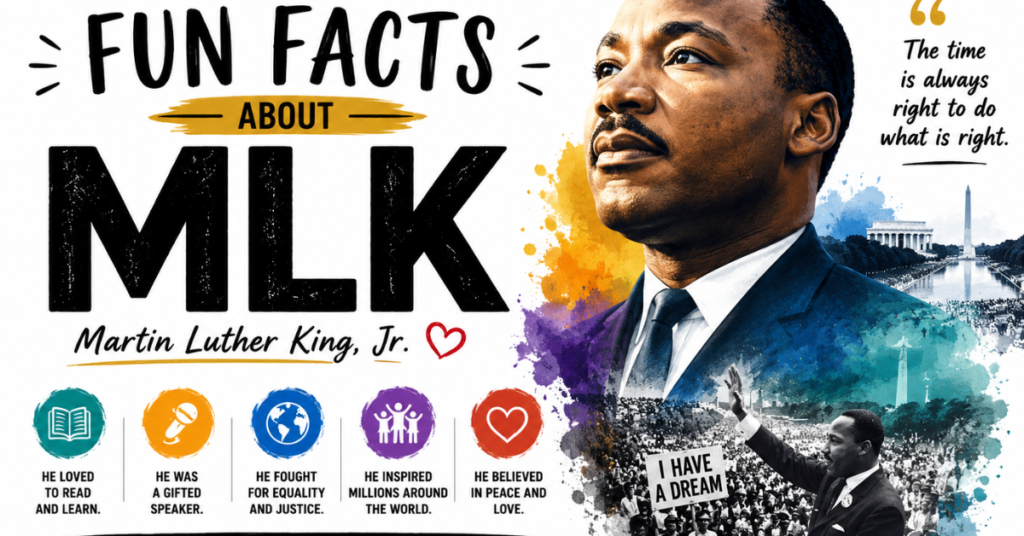
He delivered it on the steps of the Lincoln Memorial in Washington, D.C., on August 28, 1963.
What Made the “I Have a Dream” Speech So Important?
It combined vivid imagery with a clear moral argument for racial equality, reaching a massive television audience and reframing the civil rights movement as a national, not regional, cause.
Martin Luther King Jr. and the March on Washington
The speech was delivered at the March on Washington for Jobs and Freedom, which drew over 250,000 participants and pressured Congress to act on civil rights legislation.
Martin Luther King Jr. and the Voting Rights Movement
King’s activism extended beyond desegregation into securing ballot access for Black Americans.
Martin Luther King Jr. and the Civil Rights Act
The Civil Rights Act of 1964, signed by President Lyndon B. Johnson, outlawed discrimination based on race, color, religion, sex, or national origin.
Martin Luther King Jr. and the Voting Rights Act
Following the 1965 Selma-to-Montgomery marches, Congress passed the Voting Rights Act of 1965, banning discriminatory voting practices like literacy tests.
Martin Luther King Jr. and the Poor People’s Campaign
In his final year, King shifted focus toward economic justice, organizing the Poor People’s Campaign to address poverty across racial lines.
Martin Luther King Jr. Wins the Nobel Peace Prize
In 1964, King became the youngest person to win the Nobel Peace Prize at age 35, recognized for his leadership in nonviolent resistance to racial injustice.
How Did Martin Luther King Jr. Spend His Nobel Prize Money?
He donated the entire $54,123 prize to fund the ongoing civil rights movement.
Martin Luther King Jr.’s Most Important Achievements
| Achievement | Year |
| Montgomery Bus Boycott | 1955–1956 |
| Founded SCLC | 1957 |
| Birmingham Campaign | 1963 |
| “I Have a Dream” speech | 1963 |
| Nobel Peace Prize | 1964 |
| Civil Rights Act signed | 1964 |
| Selma marches | 1965 |
| Voting Rights Act signed | 1965 |
| Poor People’s Campaign launched | 1968 |
Martin Luther King Jr.’s Most Famous Speeches
- “I Have a Dream” (1963)
- “Letter from Birmingham Jail” (1963)
- “I’ve Been to the Mountaintop” (1968)
- Nobel Peace Prize acceptance speech (1964)
Martin Luther King Jr.’s Most Famous Quotes
- “Injustice anywhere is a threat to justice everywhere.”
- “The time is always right to do what is right.”
- “Darkness cannot drive out darkness; only light can do that.”
Fun Facts About Martin Luther King Jr.
- He entered college at just 15 years old.
- He was arrested nearly 30 times during his activism.
- He was named Time magazine’s Man of the Year in 1963.
Surprising Facts About Martin Luther King Jr.
- His birth name was Michael, not Martin.
- He survived a near-fatal stabbing in New York in 1958, years before his assassination.
- He initially studied sociology before turning to theology.
Martin Luther King Jr. Facts for Kids
- He believed in solving problems with words and peaceful protest, not violence.
- He gave one of the most famous speeches in American history when he was only 34.
- A national holiday is celebrated every January in his honor.
15 Reasons Why Martin Luther King Jr. Was Important
- Led the Montgomery Bus Boycott
- Founded the SCLC
- Pioneered large-scale nonviolent protest in the US
- Led the Birmingham Campaign
- Wrote the Letter from Birmingham Jail
- Delivered the “I Have a Dream” speech
- Helped organize the March on Washington
- Influenced passage of the Civil Rights Act
- Influenced passage of the Voting Rights Act
- Won the Nobel Peace Prize
- Advocated for economic justice via the Poor People’s Campaign
- Inspired global nonviolent movements
- Became a symbol of moral leadership
- Left behind a body of writing still taught today
- Has a national holiday honoring his legacy
Martin Luther King Jr.’s Biggest Challenges
King faced constant surveillance by the FBI, repeated arrests, violent threats, and deep resistance from segregationist officials throughout his career.
How Many Times Was Martin Luther King Jr. Arrested?
He was arrested approximately 29 to 30 times, primarily for acts of civil disobedience.
Martin Luther King Jr.’s Final Years
By 1968, King had broadened his focus to poverty and labor rights, traveling to Memphis, Tennessee, in support of striking sanitation workers.
What Happened to Martin Luther King Jr.?
He was assassinated by James Earl Ray while standing on the balcony of the Lorraine Motel in Memphis.
When Did Martin Luther King Jr. Die?
He died on April 4, 1968.
Martin Luther King Jr.’s Assassination and Its Historical Context
His death triggered nationwide unrest and grief, and accelerated support for fair housing legislation, culminating in the Civil Rights Act of 1968.
How Old Was Martin Luther King Jr. When He Died?
He was 39 years old.
Martin Luther King Jr.’s Legacy
King’s influence extends far beyond the laws passed during his lifetime, shaping how later generations approach civil rights advocacy.
How Martin Luther King Jr. Changed America
He helped dismantle legal segregation, expanded voting access, and redefined nonviolent civil disobedience as an effective political tool.
Martin Luther King Jr.’s Influence on Civil Rights Today
His speeches and writings remain foundational texts in modern civil rights and social justice movements worldwide.
Why Is Martin Luther King Jr. Day Celebrated?
Martin Luther King Jr. Day honors his contributions to civil rights and encourages community service in his memory.
When Is Martin Luther King Jr. Day?
It’s observed on the third Monday of January each year.
How Did Martin Luther King Jr. Day Become a National Holiday?
President Ronald Reagan signed it into law in 1983, and it was first observed as a federal holiday in 1986.
Martin Luther King Jr. Books and Educational Resources
- Stride Toward Freedom (King’s own account of the Montgomery Bus Boycott)
- Why We Can’t Wait (King’s account of the Birmingham Campaign)
- The Autobiography of Martin Luther King, Jr. (compiled from his writings and speeches)
Martin Luther King Jr. Timeline
| Year | Event |
| 1929 | Born in Atlanta, Georgia |
| 1948 | Graduates from Morehouse College |
| 1953 | Marries Coretta Scott |
| 1955 | Leads Montgomery Bus Boycott |
| 1957 | Co-founds SCLC |
| 1963 | Birmingham Campaign; “I Have a Dream” speech |
| 1964 | Civil Rights Act signed; Nobel Peace Prize awarded |
| 1965 | Voting Rights Act signed |
| 1968 | Assassinated in Memphis, Tennessee |
Final Thoughts on Martin Luther King Jr.’s Life and Legacy
Martin Luther King Jr.’s life spanned just 39 years, but his impact on American law, culture, and moral conscience continues to shape the country today. From a Baptist pulpit in Montgomery to the steps of the Lincoln Memorial, his commitment to nonviolent resistance turned a regional protest movement into a defining chapter of American history.
Frequently Asked Questions About Martin Luther King Jr.
- What are some facts about Dr. Martin Luther King Jr.’s children and grandchildren?
Martin Luther King Jr. and Coretta Scott King had four children: Yolanda, Martin Luther King III, Dexter, and Bernice. Their children and grandchildren have continued parts of the family’s civil rights legacy. - What’s a bad thing that not many people know about Martin Luther King?
King faced criticism over aspects of his personal life, including marital infidelity. These controversies are discussed separately from his major civil rights achievements. - What can I learn about Martin Luther King Jr. from his 29 arrests and police encounters?
His arrests show how often he faced legal pressure and police opposition while using nonviolent protest to challenge segregation and discrimination. - Who was Martin Luther King? Why is he important?
Martin Luther King Jr. was a Baptist minister and civil rights leader who advocated nonviolent resistance. He played a major role in the fight for racial equality in the United States. - What bad qualities did Martin Luther King Jr. have? What obscure actions did he commit?
King was not perfect and faced criticism, particularly concerning his personal conduct and some private relationships. However, claims about “obscure actions” should be checked against reliable historical evidence rather than rumors.

Hi, I’m Benjamin, the person behind FactsAboutDog.com. 🐶
I’m passionate about dogs and love sharing interesting, fun, and educational facts about our furry friends. Through FactsAboutDog.com, I aim to make learning about dogs simple, enjoyable, and informative for dog lovers everywhere.
From amazing dog facts to breed information and fascinating animal knowledge, my goal is to help readers discover something new every day.
Explore the world of dogs with Benjamin at FactsAboutDog.com!