Egg Noodles Nutrition Facts: Calories, Protein, Carbs, and Whether They’re Healthy
One cup of cooked egg noodles delivers 221 calories, 7 grams of protein, and 40 grams of carbohydrates so egg noodles nutrition facts land somewhere between “comfort food” and “quietly nutritious.” If you’ve ever stood in the pasta aisle wondering whether that bag of wide egg noodles fits your goals, you’re not alone; it’s one of the most common questions home cooks bring to a nutrition label.
This guide walks through the calories, protein, fiber, glycemic index, and vitamin content of egg noodles, drawing on USDA FoodData Central figures the way a dietitian would read them. We’ll also compare egg noodles to regular pasta, flag who should watch their portions, and answer the specific questions people search for most.
Egg Noodles Nutrition Facts
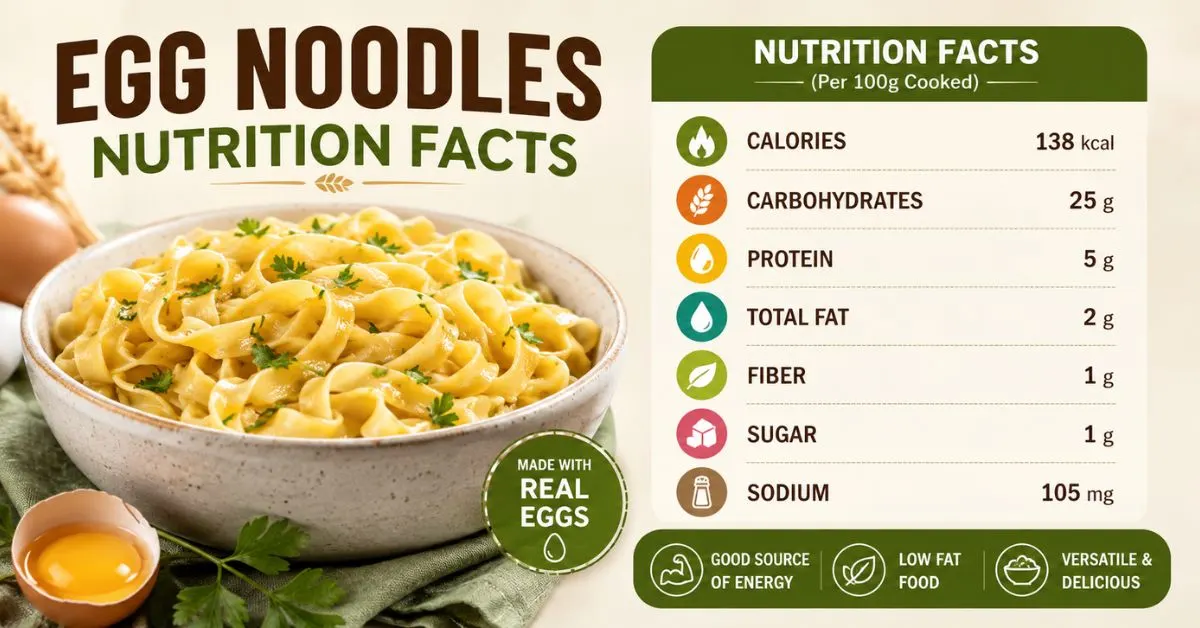
A single 1-cup (160g) serving of cooked, enriched egg noodles is a genuinely nutrient-dense choice once you look past the calorie count. Egg noodles nutrition facts show strong contributions of selenium, folate, and thiamine nutrients tied to immune function, energy metabolism, and DNA repair alongside a moderate carbohydrate load.
| Nutrient | Amount (1 cup, 160g cooked) | % Daily Value |
| Calories | 221 | 11% |
| Protein | 7g | 15% |
| Carbohydrates | 40g | 15% |
| Dietary Fiber | 2g | 7% |
| Fat | 3g | 4% |
| Selenium | 70% DV | 70% |
| Folate | 55% DV | 55% |
| Thiamine | 39% DV | 39% |
| Manganese | 22% DV | 22% |
| Niacin | 21% DV | 21% |
| Iron | 13% DV | 13% |
Source: USDA FoodData Central, enriched cooked egg noodles.
Egg Noodles Nutrition Facts: Calories and Macronutrient Breakdown
Calories in egg noodles shift depending on serving size, so it helps to know both the dry and cooked figures before you measure. A 28-gram dry portion runs about 109 calories, while a full cooked cup (160g) comes to 221 calories nearly double, since cooked noodles absorb water and weigh more per cup.
On a macronutrient basis, roughly 73% of those calories come from carbohydrates, 14% from fat, and 13% from protein. That carb-forward profile makes egg noodles primarily an energy food rather than a protein source, which matters if you’re building a plate around macronutrient targets or tracking net carbs for a specific eating plan.
Egg Noodles Nutrition Facts: Key Health Benefits
Enriched egg noodles earn their place in a balanced diet mainly through fortification manufacturers add back B vitamins and iron that refining strips from wheat flour. This is why egg noodles nutrition facts show such high selenium and folate percentages compared to many other refined grain products on the shelf.
Selenium supports immune defense, while thiamine, niacin, and riboflavin all play roles in converting food into usable energy and repairing DNA. Manganese, also present in meaningful amounts, acts as an antioxidant that helps protect cells from oxidative stress a quiet nutritional upside easy to miss in a dish mostly known for comfort.
Egg Noodles Nutrition Facts: Potential Downsides
No single food is perfect, and egg noodles nutrition facts include a few trade-offs worth knowing before you build a weekly meal plan around them. The biggest concerns are calorie density, carbohydrate load, and gluten content each manageable, but each worth factoring into portion decisions.
Calorie Content
At 221 calories per cooked cup, egg noodles run higher than lighter pasta shapes like penne, partly because they’re denser and pack more noodle into the same cup measurement. Topping them with butter, cheese, or cream sauce can push a modest bowl into a genuinely heavy meal quickly.
High in Carbs
With over 40 grams of carbohydrate per cup and a glycemic index around 57, egg noodles raise blood sugar somewhat faster than lower-GI pasta. Diets built around lower-carb or ketogenic principles generally exclude egg noodles, since one serving can use up a meaningful share of a strict daily carb allowance.
Contains Gluten
Egg noodles are made from wheat flour, so they contain gluten and aren’t suitable for anyone with celiac disease or a diagnosed gluten sensitivity. Symptoms like bloating, stomach pain, or fatigue after eating them are a signal to explore a gluten-free noodle alternative instead.
How Do Egg Noodles Nutrition Facts Stack Up Against Other Pasta Types?
Side by side, a cup of cooked egg noodles and a cup of regular pasta look more alike than different, but a few gaps stand out. Egg noodles run slightly higher in calories and cholesterol thanks to the egg content, while regular durum-wheat pasta edges ahead on protein density per gram in some brands.
| Metric (1 cup cooked) | Egg Noodles | Regular Pasta |
| Calories | 221 | ~200 |
| Protein | 7g | ~7g |
| Carbohydrates | 40g | ~42g |
| Cholesterol | 46mg | 0mg |
| Glycemic Index | ~57 (moderate) | 42–58 (moderate) |
The takeaway: neither option dramatically outperforms the other nutritionally, so the better pick usually comes down to texture preference, cholesterol goals, or what a recipe calls for.
Egg Noodles Nutrition Facts: Glycemic Index and Blood Sugar Impact
Egg noodles carry a moderate glycemic index in the high-40s to high-50s range, meaning they raise blood glucose more gradually than white bread but faster than legume-based pastas. This matters most for anyone managing insulin sensitivity or type 2 diabetes risk, where steadier post-meal blood sugar is a daily goal.
You can soften that impact by pairing noodles with protein and healthy fat grilled chicken, olive oil, or a handful of nuts all slow digestion and blunt the glucose spike. Portion control still matters most: sticking near one cooked cup keeps the glycemic load in a reasonable, manageable range.
Egg Noodles Nutrition Facts: Protein Content and Its Importance
Seven grams of protein per cooked cup makes egg noodles a modest but genuine contributor to daily protein needs, especially for anyone eating several carb-based meals a week. The protein is complete, containing all essential amino acids, which sets egg noodles apart from many plain grain products.
That said, seven grams won’t carry a high-protein goal on its own women generally need around 46 grams and men around 56 grams daily. Pairing noodles with chicken, tofu, or beans turns a carb-heavy bowl into a more balanced, satisfying plate that supports muscle repair after exercise.
Egg Noodles Nutrition Facts: Cholesterol and Heart Health Considerations
Because they’re made with real eggs, egg noodles carry dietary cholesterol that plain wheat pasta doesn’t around 46mg per cooked cup, roughly 15% of the general daily limit. For most healthy adults, this isn’t a major concern, since research increasingly points to saturated fat as the bigger driver of blood cholesterol.
Anyone managing heart disease risk factors or following a doctor’s cholesterol guidance may still want to watch portions or choose “no-yolk” egg noodle varieties, which cut cholesterol meaningfully. Pairing noodles with vegetables and olive oil instead of butter is a simple, heart-conscious swap that keeps flavor intact.
Egg Noodles Nutrition Facts: Fiber Content and Digestive Health
Fiber is the weak point in egg noodles nutrition facts a cooked cup provides only about 2 grams, well short of the 25 to 38 grams adults need daily. That’s not unusual for refined pasta generally, but it does mean egg noodles alone won’t do much heavy lifting for digestive regularity.
The fix is simple: bulk up the bowl with fiber-rich additions like broccoli, spinach, or chickpeas, which slow digestion and add volume without many extra calories. Whole-grain egg noodle varieties, where available, offer a straightforward upgrade for anyone specifically chasing more fiber from this dish.
Are Egg Noodles Healthy? Final Verdict on Egg Noodles Nutrition Facts
Taken as a whole, egg noodles nutrition facts support a clear, practical verdict: they’re a reasonable, moderately nutritious carbohydrate source that fits comfortably into most balanced diets. The enrichment process genuinely boosts their vitamin and mineral profile well beyond what “plain pasta” suggests to most shoppers.
The habits that matter most are portion size and topping choices sticking near one cooked cup and pairing it with lean protein and vegetables turns a simple bowl of noodles into a well-rounded meal. For anyone managing carbs, cholesterol, or gluten specifically, a few smart substitutions keep egg noodles firmly on the table.
Frequently Asked Questions
Are egg noodles healthy or unhealthy?
Egg noodles can fit into a balanced diet in moderation. One cooked cup provides 221 calories, 40g carbs, and 7g protein, plus meaningful selenium, folate, and B vitamins the main caution is watching portion size and topping choices.
Are egg noodles carbs or protein?
They’re primarily a carbohydrate food, with 40g of carbs per cooked cup against just 7g of protein. Egg noodles work best in a meal plan as an energy source, not a primary protein source.
Can I eat egg noodles for weight loss?
Yes, in controlled portions. A single cup at 221 calories can fit a weight-management plan when paired with lean protein and vegetables rather than heavy butter or cream sauces.
Are egg noodles high in sugar?
No cooked egg noodles contain less than 1 gram of sugar per cup. Their carbohydrate content comes almost entirely from starch, not added or natural sugars.
Are egg noodles gluten-free?
No. Traditional egg noodles are made with wheat flour and contain gluten, making them unsuitable for anyone with celiac disease or gluten sensitivity.
How many calories are in a cup of cooked egg noodles?
A standard 1-cup (160g) serving of cooked, enriched egg noodles contains 221 calories.
Are egg noodles better than regular pasta?
Neither is clearly “better” egg noodles have slightly more cholesterol and calories, while regular pasta is marginally lower in fat. The nutritional gap is small enough that recipe and texture preference usually decide the choice.

Hi, I’m Benjamin, the person behind FactsAboutDog.com. 🐶
I’m passionate about dogs and love sharing interesting, fun, and educational facts about our furry friends. Through FactsAboutDog.com, I aim to make learning about dogs simple, enjoyable, and informative for dog lovers everywhere.
From amazing dog facts to breed information and fascinating animal knowledge, my goal is to help readers discover something new every day.
Explore the world of dogs with Benjamin at FactsAboutDog.com!