Egg Nutrition Facts: The Complete Guide to Benefits & Risks
Eggs are one of the most nutrient-dense foods available, packed with essential vitamins, minerals, and high-quality protein that supports everyday health. A single egg contains a powerful mix of nutrients, including vitamin D, choline, and omega-3 fatty acids, which contribute to brain function, bone strength, and heart health.
Beyond their impressive nutrient profile, eggs are also a great source of antioxidants like lutein and zeaxanthin, which support eye health and reduce oxidative stress in the body. Whether boiled, scrambled, or poached, eggs offer a versatile way to boost daily nutrition. Understanding their caloric value and macronutrient breakdown can help you make informed dietary choices that align with your health and fitness goals.
Egg Nutrition Facts at a Glance
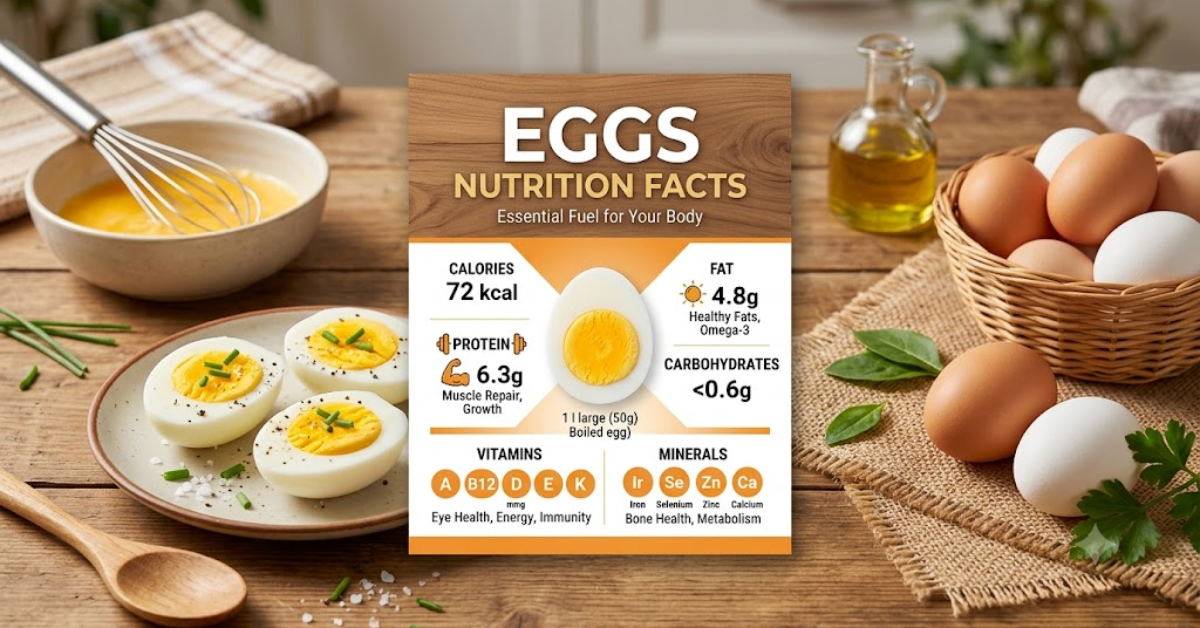
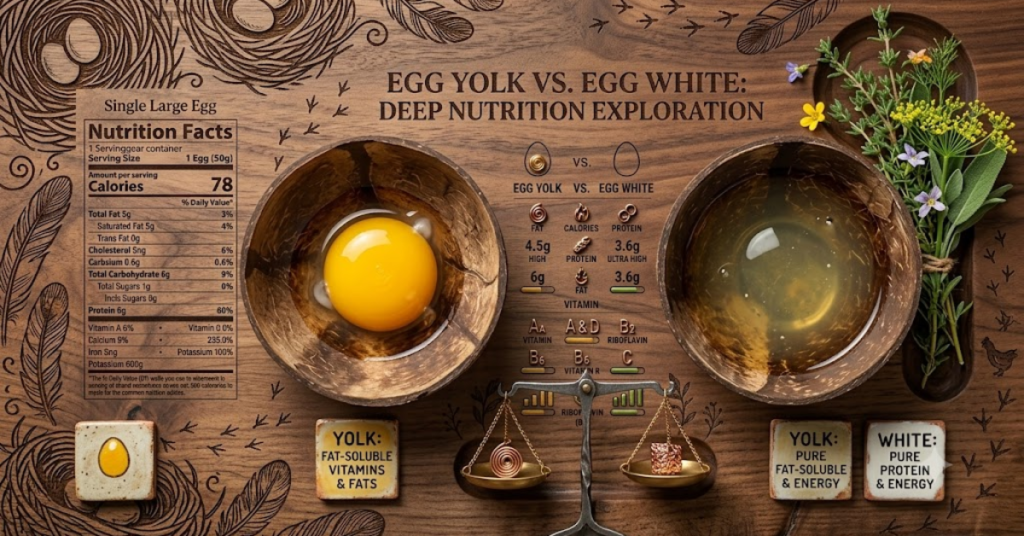
Values below are for one large egg (about 50g), based on USDA FoodData Central data:
| Nutrient | Amount | % Daily Value |
| Calories | ~72 kcal | |
| Protein | ~6.3 g | |
| Total fat | ~5 g | |
| Saturated fat | ~1.6 g | |
| Cholesterol | ~186 mg | |
| Carbohydrates | <1 g | |
| Choline | ~147 mg | ~27% (women) |
| Selenium | ~15 mcg | ~27% |
| Vitamin B12 | ~0.6 mcg | ~25% |
| Vitamin D | ~1 mcg | ~7% |
Egg Nutrition Facts by Size
Nutrient content scales roughly with egg weight:
| Egg Size | Approx. Weight | Approx. Calories |
| Small | 38g | ~54 kcal |
| Medium | 44g | ~63 kcal |
| Large | 50g | ~72 kcal |
| Extra-Large | 56g | ~80 kcal |
| Jumbo | 63g | ~90 kcal |
Egg Protein and Essential Amino Acids
Eggs are a complete protein, supplying all nine essential amino acids your body can’t produce on its own. Egg protein has a Protein Digestibility-Corrected Amino Acid Score (PDCAAS) of 1.0 the highest score on the scale meaning it’s exceptionally well absorbed and used by the body.
Vitamins and Minerals in Eggs
A single egg provides a broad micronutrient profile, including vitamin B12, riboflavin, selenium, and small amounts of vitamin D one of the few natural food sources of vitamin D. Most vitamins and minerals are concentrated in the yolk.
Choline in Eggs
Eggs are the richest common dietary source of choline, an essential nutrient for brain development, liver function, and cell structure. One large egg provides about 147mg of choline roughly 25–27% of the daily adequate intake. According to NIH data, a large share of U.S. adults don’t meet their daily choline needs, making eggs a meaningful contributor.
Healthy Fats and Omega-3s in Eggs
Most of the fat in an egg is unsaturated fat, with only about 1.6 grams of saturated fat and no trans fat. Standard eggs contain small amounts of omega-3 fatty acids; hens fed flaxseed or algae-based diets produce eggs with meaningfully higher omega-3 content.
Health Benefits of Eggs
Eggs Support Muscle Maintenance
The combination of high-quality protein and amino acids supports muscle protein synthesis, which is why eggs are popular after exercise and are being studied for their role in preventing age-related muscle loss (sarcopenia).
Eggs May Promote Satiety
Egg protein has been shown in some studies to reduce ghrelin, a hormone that triggers hunger. This may support satiety and help with a calorie-controlled eating pattern though eating eggs alone doesn’t cause weight loss on its own.
Eggs May Support Eye Health
Egg yolks contain lutein and zeaxanthin, antioxidants that accumulate in the retina and are associated with a lower risk of cataracts and age-related macular degeneration over time.
Eggs Provide Nutrients Important for Brain Function
Choline is a precursor to acetylcholine, a neurotransmitter involved in memory. Some research links adequate choline intake with better cognitive outcomes, though more human research is ongoing.
Eggs and Heart Health
Eggs and Cholesterol: What the Evidence Says
Dietary cholesterol and blood cholesterol aren’t the same thing. Cholesterol metabolism is complex and varies between individuals the body adjusts its own cholesterol production in response to diet, though not identically for everyone. Saturated fat intake and overall dietary pattern also play a significant role in blood cholesterol levels.
Do Eggs Raise LDL Cholesterol?
For most healthy people, moderate egg intake appears to have a limited effect on LDL (“bad”) cholesterol compared with the effect of saturated and trans fats. Individual responses vary, and some people are more sensitive to dietary cholesterol than others.
Eggs and HDL Cholesterol
Some research associates egg consumption with modestly higher HDL (“good”) cholesterol. Higher HDL is generally considered favorable, but it isn’t a guarantee of lower cardiovascular risk on its own overall lipid patterns and health history matter too.
Who May Need to Limit Eggs?
People with familial hypercholesterolemia, existing cardiovascular disease, or other cholesterol-related conditions may be advised to moderate egg intake. Anyone with these concerns should discuss personal targets with a healthcare provider rather than relying on a general rule.
Egg Yolk vs. Egg White Nutrition
| Nutrient | Whole Egg | Egg White | Egg Yolk |
| Protein | ✓ | ✓ | ✓ |
| Choline | ✓ | Minimal | ✓✓ |
| Vitamin D | ✓ | Minimal | ✓✓ |
| Lutein/Zeaxanthin | ✓ | Minimal | ✓✓ |
| Cholesterol | ✓ | None | ✓✓ |
| Calories | ~72 | ~17 | ~55 |
Whole Eggs vs. Egg Whites
Whole eggs deliver more complete nutrition since most vitamins, choline, and antioxidants are concentrated in the yolk. Egg whites are a useful lower-calorie, lower-cholesterol option for people specifically limiting those intakes, but they lack most of the egg’s micronutrients.
Brown vs. White Eggs
Shell color is determined by the breed and genetics of the hen not nutrition. Brown and white eggs from hens raised under similar conditions have nearly identical nutrient profiles; any differences typically come from the hen’s diet, not the shell color itself.
Regular vs. Omega-3 Eggs
Omega-3 enriched eggs come from hens fed flaxseed or algae-based diets, resulting in higher omega-3 fatty acid content than standard eggs. Other nutrients remain largely similar.
Organic vs. Free-Range vs. Pasture-Raised Eggs
These labels describe production methods, not guaranteed nutrient differences:
- Organic hens fed organic feed, no synthetic pesticides
- Free-range hens have some outdoor access
- Pasture-raised hens roam outdoors extensively; may have modestly higher omega-3 and vitamin levels depending on diet, though this varies by farm
Egg Nutrition by Cooking Method
| Method | Added Fat | Calorie Impact | Consideration |
| Boiled | None | Lowest | No added fat |
| Poached | None | Lowest | No added cooking fat |
| Scrambled | Depends | Moderate | Milk/butter changes totals |
| Fried | Depends | Highest | Oil adds calories |
Boiled vs. Fried vs. Scrambled Eggs
Cooking method affects calorie and fat content more than core nutrient density. Boiling and poaching add no extra fat; frying in oil or butter adds meaningful calories. Cooking also improves protein digestibility compared to raw eggs, though it causes minor losses in some heat-sensitive B vitamins.
Potential Risks of Eating Eggs
- Dietary cholesterol content, which affects some individuals more than others
- Risk of salmonella from undercooked or mishandled eggs
- Possible allergen for sensitive individuals
- Added sodium and saturated fat when paired with processed meats

Egg Nutrition Facts at a Glance
Values below are for one large egg (about 50g), based on USDA FoodData Central data:
Nutrient
Amount
% Daily Value
Calories
~72 kcal
Protein
~6.3 g
Total fat
~5 g
Saturated fat
~1.6 g
Cholesterol
~186 mg
Carbohydrates
<1 g
Choline
~147 mg
~27% (women)
Selenium
~15 mcg
~27%
Vitamin B12
~0.6 mcg
~25%
Vitamin D
~1 mcg
~7%
Egg Nutrition Facts by Size
Nutrient content scales roughly with egg weight:
Egg Size
Approx. Weight
Approx. Calories
Small
38g
~54 kcal
Medium
44g
~63 kcal
Large
50g
~72 kcal
Extra-Large
56g
~80 kcal
Jumbo
63g
~90 kcal
Egg Protein and Essential Amino Acids
Eggs are a complete protein, supplying all nine essential amino acids your body can’t produce on its own. Egg protein has a Protein Digestibility-Corrected Amino Acid Score (PDCAAS) of 1.0 the highest score on the scale meaning it’s exceptionally well absorbed and used by the body.
Vitamins and Minerals in Eggs
A single egg provides a broad micronutrient profile, including vitamin B12, riboflavin, selenium, and small amounts of vitamin D one of the few natural food sources of vitamin D. Most vitamins and minerals are concentrated in the yolk.
Choline in Eggs
Eggs are the richest common dietary source of choline, an essential nutrient for brain development, liver function, and cell structure. One large egg provides about 147mg of choline roughly 25–27% of the daily adequate intake. According to NIH data, a large share of U.S. adults don’t meet their daily choline needs, making eggs a meaningful contributor.
Healthy Fats and Omega-3s in Eggs
Most of the fat in an egg is unsaturated fat, with only about 1.6 grams of saturated fat and no trans fat. Standard eggs contain small amounts of omega-3 fatty acids; hens fed flaxseed or algae-based diets produce eggs with meaningfully higher omega-3 content.
Health Benefits of Eggs
Eggs Support Muscle Maintenance
The combination of high-quality protein and amino acids supports muscle protein synthesis, which is why eggs are popular after exercise and are being studied for their role in preventing age-related muscle loss (sarcopenia).
Eggs May Promote Satiety
Egg protein has been shown in some studies to reduce ghrelin, a hormone that triggers hunger. This may support satiety and help with a calorie-controlled eating pattern though eating eggs alone doesn’t cause weight loss on its own.
Eggs May Support Eye Health
Egg yolks contain lutein and zeaxanthin, antioxidants that accumulate in the retina and are associated with a lower risk of cataracts and age-related macular degeneration over time.
Eggs Provide Nutrients Important for Brain Function
Choline is a precursor to acetylcholine, a neurotransmitter involved in memory. Some research links adequate choline intake with better cognitive outcomes, though more human research is ongoing.
Eggs and Heart Health
Eggs and Cholesterol: What the Evidence Says
Dietary cholesterol and blood cholesterol aren’t the same thing. Cholesterol metabolism is complex and varies between individuals the body adjusts its own cholesterol production in response to diet, though not identically for everyone. Saturated fat intake and overall dietary pattern also play a significant role in blood cholesterol levels.
Do Eggs Raise LDL Cholesterol?
For most healthy people, moderate egg intake appears to have a limited effect on LDL (“bad”) cholesterol compared with the effect of saturated and trans fats. Individual responses vary, and some people are more sensitive to dietary cholesterol than others.
Eggs and HDL Cholesterol
Some research associates egg consumption with modestly higher HDL (“good”) cholesterol. Higher HDL is generally considered favorable, but it isn’t a guarantee of lower cardiovascular risk on its own overall lipid patterns and health history matter too.
Who May Need to Limit Eggs?
People with familial hypercholesterolemia, existing cardiovascular disease, or other cholesterol-related conditions may be advised to moderate egg intake. Anyone with these concerns should discuss personal targets with a healthcare provider rather than relying on a general rule.
Egg Yolk vs. Egg White Nutrition
Nutrient
Whole Egg
Egg White
Egg Yolk
Protein
✓
✓
✓
Choline
✓
Minimal
✓✓
Vitamin D
✓
Minimal
✓✓
Lutein/Zeaxanthin
✓
Minimal
✓✓
Cholesterol
✓
None
✓✓
Calories
~72
~17
~55
Whole Eggs vs. Egg Whites
Whole eggs deliver more complete nutrition since most vitamins, choline, and antioxidants are concentrated in the yolk. Egg whites are a useful lower-calorie, lower-cholesterol option for people specifically limiting those intakes, but they lack most of the egg’s micronutrients.
Brown vs. White Eggs
Shell color is determined by the breed and genetics of the hen not nutrition. Brown and white eggs from hens raised under similar conditions have nearly identical nutrient profiles; any differences typically come from the hen’s diet, not the shell color itself.
Regular vs. Omega-3 Eggs
Omega-3 enriched eggs come from hens fed flaxseed or algae-based diets, resulting in higher omega-3 fatty acid content than standard eggs. Other nutrients remain largely similar.
Organic vs. Free-Range vs. Pasture-Raised Eggs
These labels describe production methods, not guaranteed nutrient differences:
Organic hens fed organic feed, no synthetic pesticides
Free-range hens have some outdoor access
Pasture-raised hens roam outdoors extensively; may have modestly higher omega-3 and vitamin levels depending on diet, though this varies by farm
Egg Nutrition by Cooking Method
Method
Added Fat
Calorie Impact
Consideration
Boiled
None
Lowest
No added fat
Poached
None
Lowest
No added cooking fat
Scrambled
Depends
Moderate
Milk/butter changes totals
Fried
Depends
Highest
Oil adds calories
Boiled vs. Fried vs. Scrambled Eggs
Cooking method affects calorie and fat content more than core nutrient density. Boiling and poaching add no extra fat; frying in oil or butter adds meaningful calories. Cooking also improves protein digestibility compared to raw eggs, though it causes minor losses in some heat-sensitive B vitamins.
Potential Risks of Eating Eggs
Dietary cholesterol content, which affects some individuals more than others
Risk of salmonella from undercooked or mishandled eggs
Possible allergen for sensitive individuals
Added sodium and saturated fat when paired with processed meats
Egg Allergies
Egg allergies are among the most common food allergies, particularly in children, with reactions ranging from mild skin irritation to more serious symptoms. Anyone with a suspected egg allergy should consult a healthcare provider before making dietary changes.
Egg Safety, Storage and Cooking
Refrigerate eggs at or below 40°F (4°C)
Store in their original carton, not the door
Follow the “sell-by” or “use-by” date on the carton for your region
Cook eggs to an internal temperature of 160°F (71°C), or until both yolk and white are fully set, to reduce foodborne illness risk
How to Include Eggs in a Balanced Diet
Boil or poach instead of frying in butter
Pair with vegetables like spinach or peppers
Use as a protein source in salads or grain bowls
Choose egg whites in addition to (not necessarily instead of) whole eggs if you’re specifically managing cholesterol intake
Frequently Asked Questions
How many calories are in a medium egg?
A medium egg contains about 65–70 calories, depending on its size and preparation.
How many calories are present in an egg, and what are the benefits of eating eggs daily?
One large egg has about 70–80 calories and provides protein, vitamins, minerals, and healthy fats that support muscles and overall health.
How many calories are present in an egg, and what are the benefits of eating eggs daily?
A large egg contains roughly 70–80 calories and can be part of a balanced diet, providing protein and several essential nutrients.
How many calories are in 2 eggs over easy?
Two over-easy eggs contain about 140–160 calories before adding extra butter or oil.
How many calories does 8 eggs contain?
Eight large eggs contain approximately 560–640 calories, depending on their size and preparation.
The Bottom Line
Eggs are an affordable, versatile source of high-quality protein, choline, and several vitamins in a low-calorie package. For most healthy people, moderate daily egg consumption fits comfortably into a balanced diet. People with specific cholesterol or cardiovascular conditions should discuss personal limits with a healthcare provider rather than relying on a one-size-fits-all number.
Sources and Evidence
Nutrition data: USDA FoodData Central
Choline data: National Institutes of Health, Office of Dietary Supplements
Cholesterol and heart health: Harvard Health Publishing; Nutrients (2022), “The Health Benefits of Egg Protein”
Food safety guidance: USDA and FDA egg safety recommendations
This article is for general informational purposes and isn’t a substitute for personalized medical or dietary advice. Consult a healthcare provider about your individual cholesterol and cardiovascular risk before making significant dietary changes.
Egg Allergies
Egg allergies are among the most common food allergies, particularly in children, with reactions ranging from mild skin irritation to more serious symptoms. Anyone with a suspected egg allergy should consult a healthcare provider before making dietary changes.
Egg Safety, Storage and Cooking
- Refrigerate eggs at or below 40°F (4°C)
- Store in their original carton, not the door
- Follow the “sell-by” or “use-by” date on the carton for your region
- Cook eggs to an internal temperature of 160°F (71°C), or until both yolk and white are fully set, to reduce foodborne illness risk
How to Include Eggs in a Balanced Diet
- Boil or poach instead of frying in butter
- Pair with vegetables like spinach or peppers
- Use as a protein source in salads or grain bowls
- Choose egg whites in addition to (not necessarily instead of) whole eggs if you’re specifically managing cholesterol intake
Frequently Asked Questions
How many calories are in a medium egg?
A medium egg contains about 65–70 calories, depending on its size and preparation.
How many calories are present in an egg, and what are the benefits of eating eggs daily?
One large egg has about 70–80 calories and provides protein, vitamins, minerals, and healthy fats that support muscles and overall health.
How many calories are present in an egg, and what are the benefits of eating eggs daily?
A large egg contains roughly 70–80 calories and can be part of a balanced diet, providing protein and several essential nutrients.
How many calories are in 2 eggs over easy?
Two over-easy eggs contain about 140–160 calories before adding extra butter or oil.
How many calories does 8 eggs contain?
Eight large eggs contain approximately 560–640 calories, depending on their size and preparation.
The Bottom Line
Eggs are an affordable, versatile source of high-quality protein, choline, and several vitamins in a low-calorie package. For most healthy people, moderate daily egg consumption fits comfortably into a balanced diet. People with specific cholesterol or cardiovascular conditions should discuss personal limits with a healthcare provider rather than relying on a one-size-fits-all number.
Sources and Evidence
- Nutrition data: USDA FoodData Central
- Choline data: National Institutes of Health, Office of Dietary Supplements
- Cholesterol and heart health: Harvard Health Publishing; Nutrients (2022), “The Health Benefits of Egg Protein”
- Food safety guidance: USDA and FDA egg safety recommendations
This article is for general informational purposes and isn’t a substitute for personalized medical or dietary advice. Consult a healthcare provider about your individual cholesterol and cardiovascular risk before making significant dietary changes.

Hi, I’m Benjamin, the person behind FactsAboutDog.com. 🐶
I’m passionate about dogs and love sharing interesting, fun, and educational facts about our furry friends. Through FactsAboutDog.com, I aim to make learning about dogs simple, enjoyable, and informative for dog lovers everywhere.
From amazing dog facts to breed information and fascinating animal knowledge, my goal is to help readers discover something new every day.
Explore the world of dogs with Benjamin at FactsAboutDog.com!